Two-stage ensemble detection
A routing model sends your X-ray to the optimal specialist — panoramic, bitewing, or periapical — then two independent neural networks cross-reference findings and come to a consensus.
YOLOV8 · YOLOV11WBF · IoU 0.6
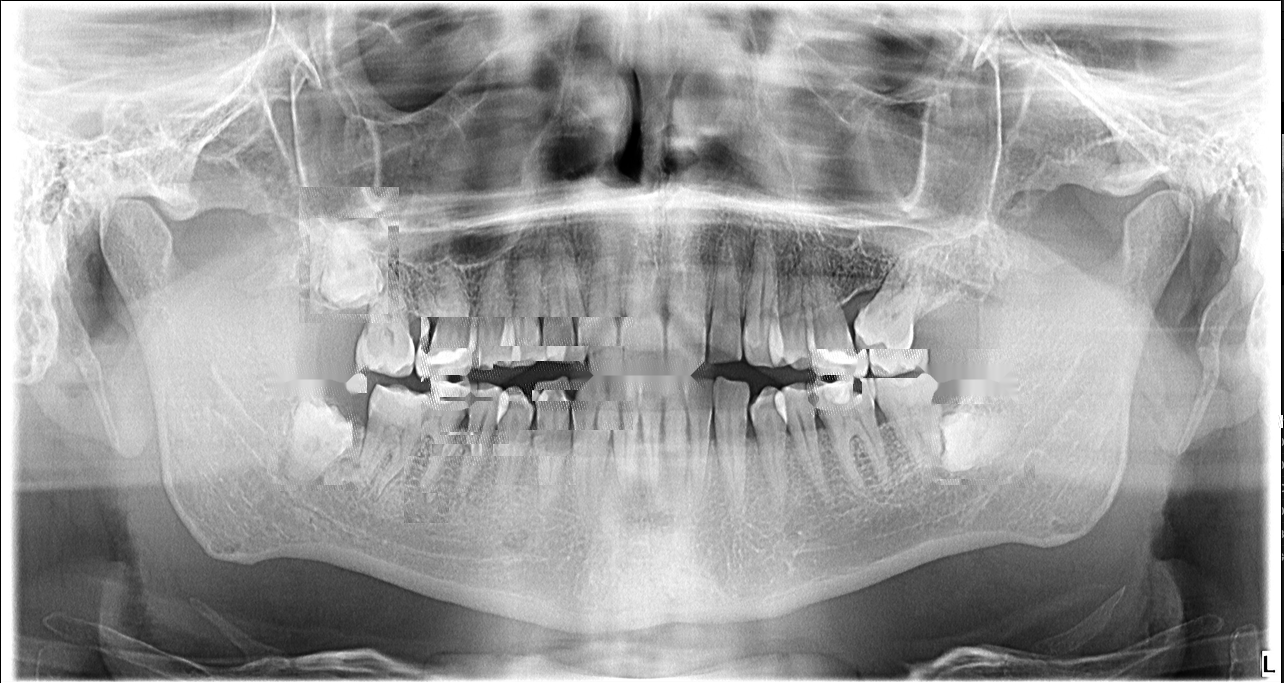
Kirana Scan runs an ensemble of specialist models across panoramic and bitewing X-rays — every finding carries a calibrated confidence score and a structured, IR(ME)R-compliant report in under three seconds.
We run image-type routing, tooth-identification, and X-ray type specific models.
No single model decides alone.
A vision-language model turns the detection graph into an IR(ME)R-compliant report with ICCMS grading and treatment notes, ready for your letterhead in under 45 seconds.
Per-finding confidence, training-cohort provenance, and out-of-sample validation on thousands of unseen X-rays. Nothing is a black box for your medico-legal file.
A live scan of a panoramic radiograph — rendered directly from Kirana Scan's detection graph. Findings are ranked by calibrated confidence and routed to the correct specialist model.
A routing model sends your X-ray to the optimal specialist — panoramic, bitewing, or periapical — then two independent neural networks cross-reference findings and come to a consensus.
Kirana Scan identifies panoramic vs bitewing vs periapical automatically, then routes the image to the model tuned for that modality — no manual selection, no misapplied weights.
Vision-language model generates structured reports with ICCMS grading, findings, and treatment notes for every patient.
82% sensitivity, calibrated confidence, and per-class thresholds tuned with Bayesian optimization against held-out clinical data.
Routing, ensemble detection, tooth charting, and the clinical narrative — all complete before your patient is back in the chair.
Every finding is anchored to a specific FDI-numbered tooth, with missing and impacted teeth charted for you.
Each stage is an independent, specialist model. Failures in one don't silently corrupt the others — the pipeline is auditable at every step.
Two independent networks analyse your panoramic X-ray and fuse their results. Catches what a single model misses.
Automatically detects and numbers every visible tooth using FDI notation. Builds a complete dental chart.
A dedicated model trained for interproximal caries on bitewings. Activates automatically when the routing model detects a bitewing image.
A vision-language model generates an IR(ME)R-compliant report with ICCMS grading, structured findings, and recommendations.
Kirana Scan flagged a periapical lesion on a lower molar that I'd initially overlooked during a packed Monday morning clinic. That early catch made all the difference for the patient's treatment plan — and honestly, for my confidence on a tired day.
Report writing used to eat into our appointment slots. Now the AI drafts a structured report in seconds and our dentists just review and sign off — we're seeing three more patients a day.
I use it as a second pair of eyes, especially for subtle interproximal caries. It's reassuring when the AI confirms what I'm seeing — and it's taught me to look more carefully when it catches something I missed.
No training required. Upload a panoramic or bitewing, get back an IR(ME)R-compliant report before your next patient is seated. Free for the first 100 scans.